Presenting the After Beckett Festival
9-11 DECEMBER 2026
A science-with-and-for-society project
This project is part of an approach to mediation and collaborative research bringing together artists, researchers and members of the public through a theatre festival to be held in Bordeaux in December 2026. Led by project director Pascale Sardin in collaboration with the City of Bordeaux, the Glob Théâtre and the Halle des Douves in Bordeaux, this free festival, open to audiences beyond the university community, aims to foster dialogue between contemporary creation and academic research around the transmission and reinterpretation of Samuel Beckett’s work, more than thirty-five years after his death.
The event explores the vitality of the Beckett corpus and its influence on contemporary writing for the stage. It brings together Sorbonne Paris Nord University, Bordeaux Montaigne University and the University of Maryland (United States) in an international partnership combining education, research, artistic creation and engagement with the public.
More than thirty-five years after his death, Beckett remains a major figure in contemporary theatre. An Irish playwright, he turned writing between English and French into an unprecedented creative space, composing and translating his own work from one language into the other. His work, shaped by waiting, memory, silence and disappearance, continues to inspire writers today. Not Beckett draws on this legacy in order to shift and renew it. Not Beckett brings together five playwrights of Irish origin who identify as women or non-binary. Their project is not to write “in the wake of” Beckett, but to write with and against him, making gender both a creative concern and a political gesture. The authors reclaim a legacy long associated with male figures in order to inscribe within it contemporary voices shaped by migration, multiple identities and a plurality of affiliations.
The KOIMETE company, based in Bordeaux, will present five previously unseen plays in French for this festival, written by contemporary English-speaking women and non-binary writers of Irish origin, as part of an effort to renew theatrical canons and interrogate gendered identities. Written in English and performed in French by students from the ERAS Master’s programme (Expérimentations et Recherches dans les Arts de la Scène), and directed by Loreleï Dupé, a doctoral researcher at ARTES (UBM), these works will offer an approach to contemporary theatre that is at once creative, reflective and participatory. The publishing house L’Ire des Marges will publish the French text Not Beckett, les pièces in early December 2026. The plays are introduced by Pascale Sardin and Loreleï Dupé.
Not Beckett seeks neither to reproduce Beckett nor to break free from him entirely. The project feminises, queers and decentres Beckett's legacy in order to test what is regarded as universal in the history of theatre. The question is no longer simply how to write after Beckett, but who has had the right to write, to speak and to be seen, so that new stories can be told after Beckett.
Not Beckett, the Plays
he five plays engage with Beckett’s emblematic forms—his fragmented voices, partially visible bodies, transitional spaces and humour—while transforming them. Where the Beckettian body is immobilised, constrained, fragmented or reduced to a voice, the plays in Not Beckett explore what it means to be assigned to a body in order to reclaim power over that assignment. Three characters move through all the texts, becoming the connecting thread of a choral composition in which the stories echo one another, shift and metamorphose.
Duet, by Olwen Fouéré: two migrants are waiting to cross the Mediterranean. Through words and movement, the characters gradually draw closer to the ghosts haunting a sea that has become a place of memory and disappearance.
Ne t’excuse jamais, by Jennifer Barclay: a basketball player confronts different versions of herself. Brought together in a triangle offense, these three figures explore the ageing body through a competition that pushes the limits of the human body.
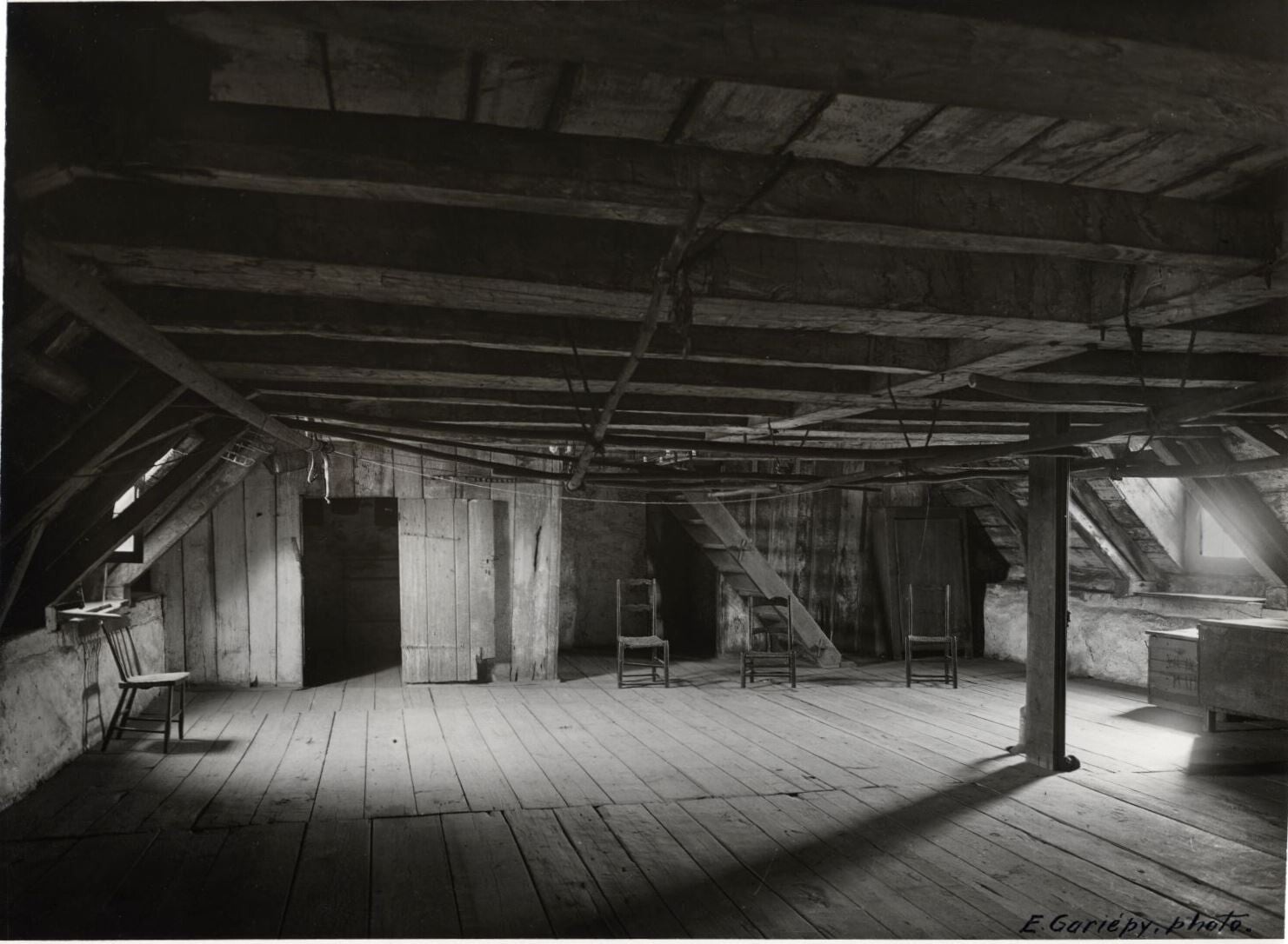
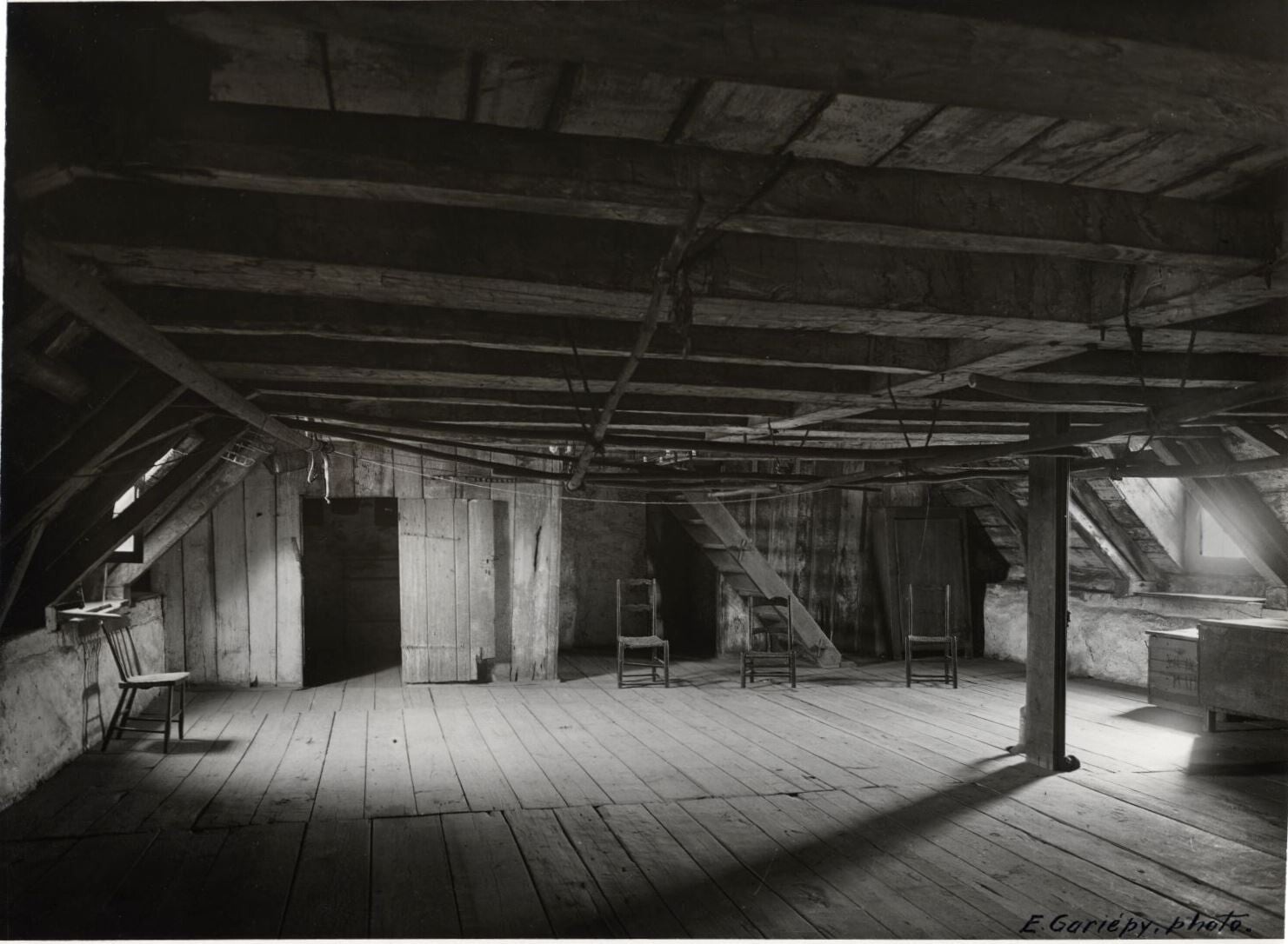
J’ARRIVE PAS À ME SOUVENIR DU…, by Nicola McCartney: three siblings return to the attic of their childhood home in search of a missing object. As the roof threatens to collapse, the search for this memory becomes an exploration of what has been lost and what can still be saved.
Le fils du gardien de phare, by Hannah Khalil: from a hospital room, a mother tells the poignant and wondrous story of a son who set out across the oceans in search of his missing father.
ATTENDS ; FELISPEAKS: a Nigerian woman accompanies her husband as he settles in London before discovering his betrayal. To reclaim her story and build her future, she embarks on a new journey to Ireland.